
Plate heat exchangers are widely used in modern industries because they provide fast and efficient heat transfer in a compact structure. Instead of using large tubes, transfer heat through a series of thin metal plates arranged closely together. Hot and cold fluids flow through separate channels, allowing heat to transfer efficiently without the two liquids mixing.
Compared with traditional shell and tube equipment, this design offers higher efficiency while taking up much less installation space. Because of this, Hot Plate Heat Transfer machines are commonly used in HVAC systems, refrigeration, food processing, chemical plants, and industrial manufacturing.
As a factory with more than 10 years of experience manufacturing PHE Exchangers, plates, and gaskets, we have supplied products for customers in HVAC, marine, food, and industrial sectors worldwide. Our products are manufactured according to ISO and CE standards to ensure stable quality and reliable performance.
Common Applications in HVAC and Refrigeration
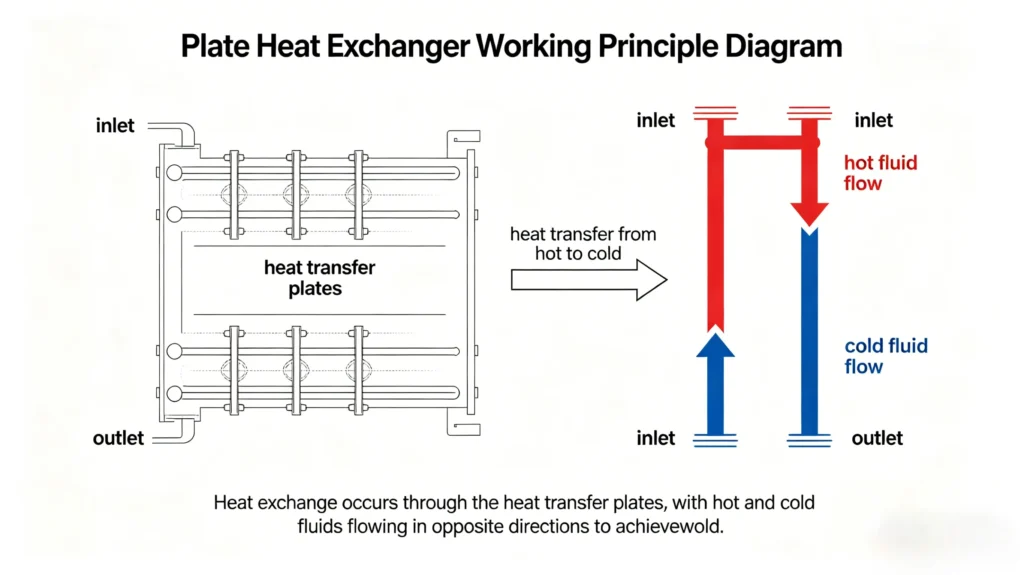
The main purpose of a Plate And Frame Heat Exchanger Manufacturers is to transfer heat between two fluids while keeping them completely separated. One fluid may need to be cooled while the other needs to be heated. The thin metal plates allow heat to pass quickly from one side to the other without direct contact between the media.
The corrugated pattern on the plates creates turbulence inside the flow channels. This turbulence improves thermal efficiency and allows the exchanger to transfer large amounts of heat in a compact space.
These systems are also widely used for energy recovery. Instead of wasting excess heat, factories can recover and reuse thermal energy to reduce operating costs and improve efficiency.
Another important advantage is preventing contamination. In industries such as food processing and chemical manufacturing, keeping fluids separated is essential for safety and product quality.
📌 Plate And Frame Exchanger Structure and Working Principle
Role in Food Processing , HVAC and Refrigeration Systems?
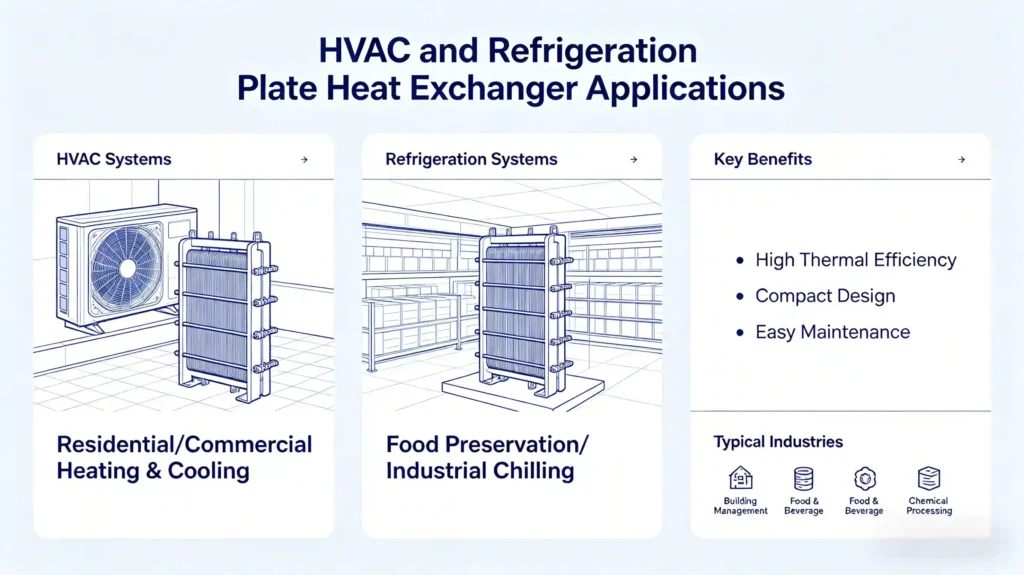
HVAC and refrigeration are among the most common applications for Plate Heat Exchanger Assembly. In the refrigeration processing , efficient temperature control is critical for stable operation and energy savings.
Heat pumps commonly use plate exchangers to transfer energy between refrigerant circuits and water systems. Chillers also rely on them to cool circulating water efficiently.
Cooling towers often use heat exchangers to separate process fluids from open cooling water loops, helping reduce contamination and corrosion risks.
District heating systems are another important application. Thermal energy from a central source is transferred into buildings through compact heat exchanger stations.
In refrigeration equipment, brazed PHE are widely used as condensers and evaporators because they can handle high pressure while maintaining excellent heat transfer performance.
📌 Common usage fields of Plate And Gasket Heat Exchanger in air conditioning and refrigeration systems
Industrial Uses in Food Processing?
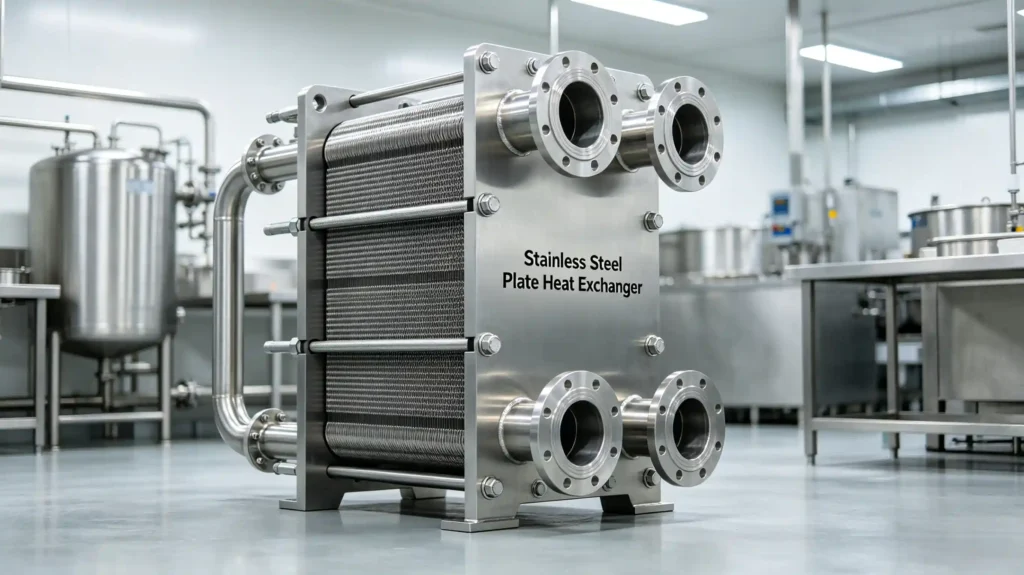
Food and beverage industries require hygienic and efficient thermal equipment. Stainless steel plate heat exchangers are commonly used because they provide excellent temperature control and are easy to clean.
One major application is milk pasteurization. During processing, milk must be heated and cooled quickly while maintaining strict hygiene standards.
In dairy and powdered food production, thermal processing is often followed by spray drying in food processing to convert liquid products such as milk or whey into stable powders.
Breweries also use plate exchangers for wort cooling during beer production. Fast cooling helps maintain product quality and production efficiency.
Other common applications include:
- Beverage cooling
- Dairy processing
- Juice production
- Food heating systems
Many food factories prefer gasketed models because they can be opened for inspection and cleaning.These heat exchangers can also be integrated with food processing CIP systems to circulate controlled cleaning solutions through production lines, helping reduce manual disassembly and maintain consistent hygiene.
With over 10 years of manufacturing experience, we understand the importance of hygienic design and reliable material quality. Our products are produced according to ISO and CE standards for stable operation in food processing environments.
📌 Suggested Image Placement
What Is a Plate Heat Exchanger Condenser Used For in Chemical and Energy Industries?
Chemical and energy industries often operate under demanding conditions involving high temperatures, pressure, and corrosive fluids.
In chemical plants, these exchangers are used for:
- Process cooling
- Solvent recovery
- Temperature control
Similar cooling and temperature-control requirements can also be found in metal finishing operations such as the anodizing process, where stable bath temperatures are important for maintaining consistent surface treatment conditions.
Precise temperature management is also important in cosmetic and specialty chemical production, particularly when working with heat-sensitive cosmetic ingredients that require controlled heating or cooling during formulation and scale-up.
Materials such as 316 stainless steel and titanium are commonly used to improve corrosion resistance.
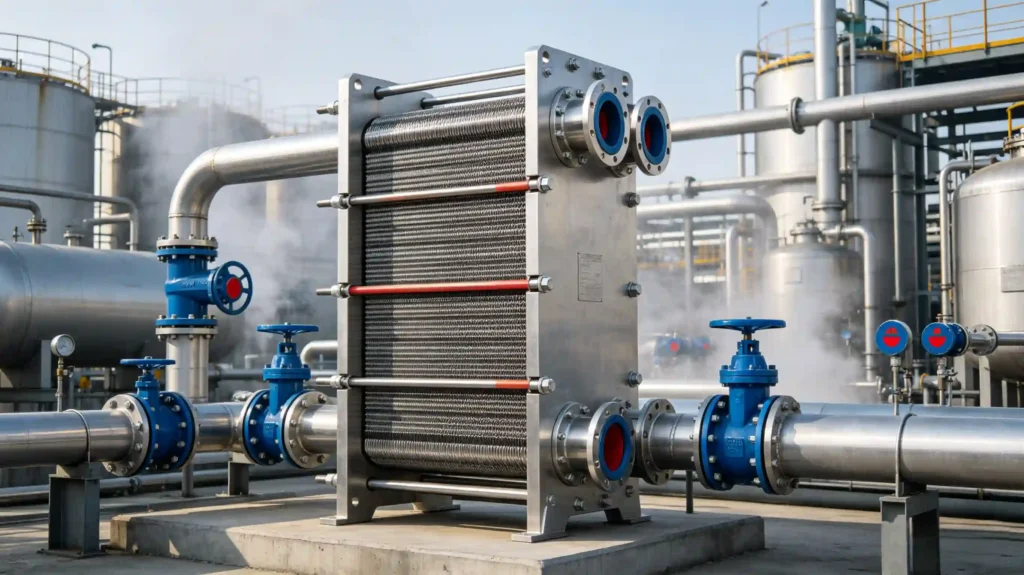
Power plants use Plate Style Heat Exchanger in cooling systems and waste heat recovery applications to improve energy efficiency.
Oil and gas industries often use welded designs because they can handle aggressive media and harsh operating conditions.
Solar water heating systems are another growing application. Heat exchangers transfer energy collected from solar panels into water systems while keeping the fluid circuits separated.
📌 Plate To Plate Heat Exchanger for chemical industry and energy power projects
What Is a Brazed Plate Heat Exchanger Used For?
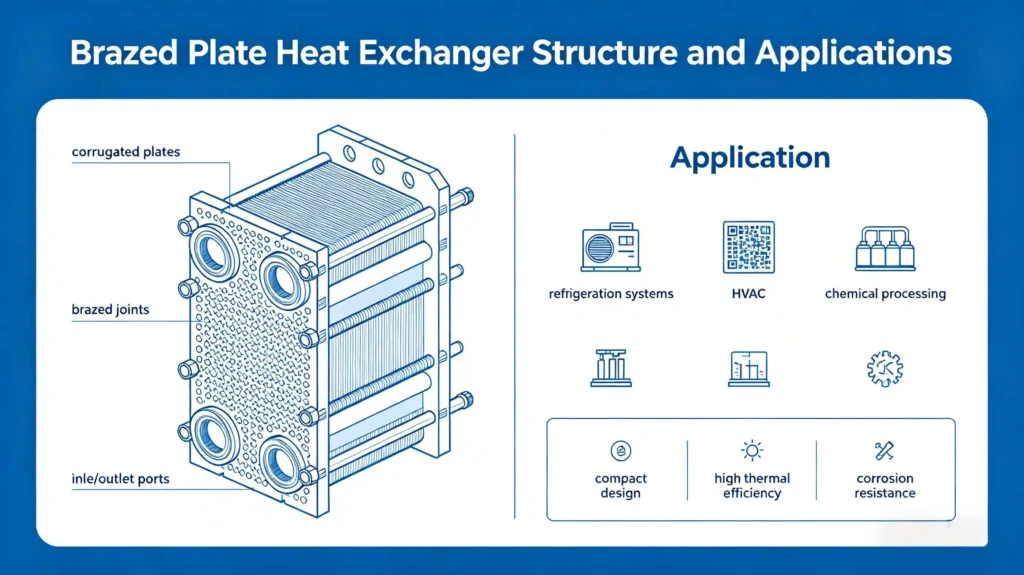
A brazed Plate Type Cooler is a compact design where the plates are permanently joined together using copper or nickel brazing materials instead of rubber gaskets.
Because there are no gaskets, these units can handle higher pressure and temperature while requiring minimal maintenance.
They are commonly used in:
- Refrigeration systems
- Heat pumps
- Boilers
- Chillers
- Hydraulic oil cooling
- Domestic hot water systems
One major advantage is compact size. Even small units can transfer large amounts of heat efficiently.
However, brazed units cannot be opened for manual cleaning, so gasketed designs are usually better for dirty fluids or applications requiring frequent maintenance.
Our factory has supplied brazed Plate Type Evaporators and replacement parts for global customers for more than 10 years. All products are manufactured under ISO and CE certified standards to ensure dependable quality.
📌 Integrated structure design and industry application of brazed Plate Type Exchanger
Advantages of Plate Type Heat Exchanger in Industrial Applications
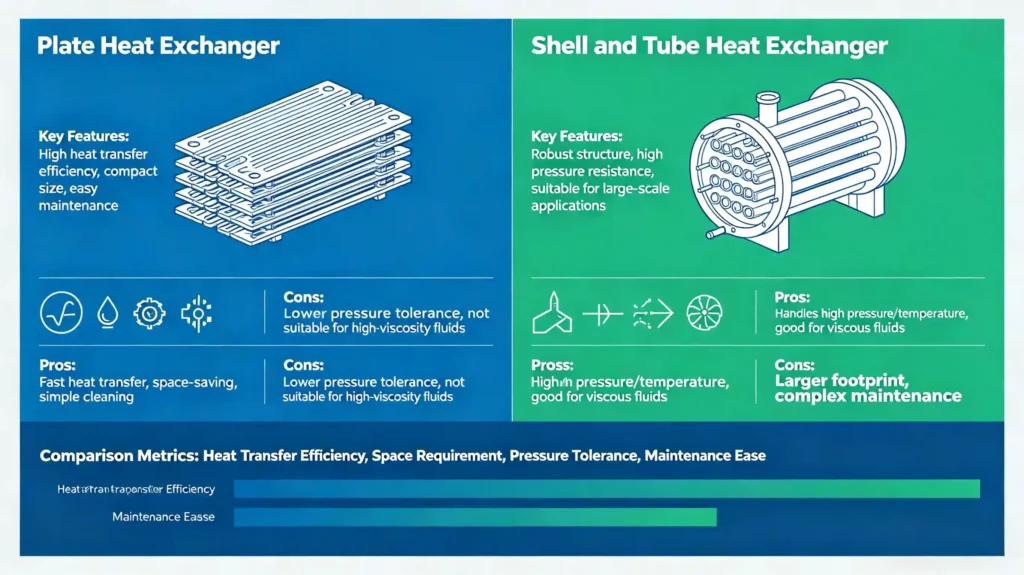
One major advantage of Plate Type Heat Exchanger Manufacturer is their high thermal efficiency. The corrugated plates create turbulence that improves heat transfer performance significantly.
Compact size is another important benefit. Compared with shell and tube systems, these exchangers usually require much less installation space.
Maintenance is relatively simple, especially for gasketed models. Plates can often be removed individually for inspection or cleaning.
Energy savings are also a key reason industries choose this technology. Efficient heat recovery helps reduce operating costs over time.
Another important advantage is fluid separation. Keeping different media isolated is essential in food processing, chemical production, and sensitive industrial applications.
📌 Suggested Image Placement
Conclusion
Plate Type Heat Exchangers are widely used in HVAC, refrigeration, food processing, chemical manufacturing, and industrial systems because they provide efficient heat transfer in a compact and reliable design.
Different applications require different configurations, including gasketed, brazed, and welded designs. Selecting the correct type depends on temperature, pressure, fluid characteristics, and maintenance requirements.
With more than 10 years of manufacturing experience, we provide PHEs, plates, and gaskets for global industrial customers. Our ISO and CE certified products are designed to deliver stable performance and long service life in demanding applications.
If you need technical support or assistance selecting the right heat exchanger solution, feel free to contact our team for professional support.
