
A plate heat exchanger rubber liner is an important sealing component installed around the connection openings of certain gasketed plate heat exchangers (GPHE). These components are also known as rubber port sleeves, frame liners, rubber inserts or rubber bushings, depending on their design.
When replacing a damaged or ageing heat exchanger rubber liner, accurate dimensions are essential for proper installation and reliable sealing.
This guide explains how to measure three key parameters: Inner Diameter (ID), Outer Diameter (OD) and Frame Plate Thickness.
Drawing on a real SONDEX S100-IS marine spare parts enquiry, Senovis PHE also introduces NBR and EPDM material selection, technical drawings, replacement costs and purchasing considerations.
What Are Plate Heat Exchanger Rubber Liners, Rubber Port Sleeves, Frame Liners and Connection Inserts?
A rubber liner provides sealing or protection around the fluid connection of a plate and frame heat exchanger.
Depending on equipment design and supplier terminology, buyers may encounter several product names:
- Plate Heat Exchanger Rubber Liner: A rubber lining component for a heat exchanger connection.
- Heat Exchanger Port Liners: Components fitted around connection ports to provide sealing or surface protection.
- Plate Heat Exchanger Frame Liners: Liners installed in or around frame connection openings.
- Rubber Port Sleeves / Rubber Boots: Flexible connection sleeves used in certain PHE configurations.
- Rubber Insert / Rubber Bushing: Insert-type components that fit into a defined connection opening.
- PHE Rubber Liner & Collar: A liner featuring a collar or flange for positioning and retention.
- Plate Heat Exchanger Frame Insert: An insert fitted within the frame connection structure.
Terms such as heat exchanger rubber, rubber liner gasket and lining for plate heat exchanger also appear in industrial spare parts searches. However, product names alone do not establish dimensional compatibility.
What is the function of port liners in a heat exchanger?
A port liner may protect the connection opening, provide a sealing interface and help reduce leakage at the frame-to-pipe connection.
Some designs use a rubber metal liner or metal-lined construction instead of an entirely rubber component. A rubber-metal plate heat exchanger liner has different structural requirements and should not automatically be substituted for a conventional rubber sleeve.
It is also important to distinguish port liners from related parts:
- A plate heat exchanger rubber gasket seals fluid channels between adjacent heat transfer plates.
- Plate heat exchanger rubber strips may serve other sealing or protective purposes.
- Plate heat exchanger rubber filters, port filters and inner strainers are filtration components, not equivalent rubber seals.
- Heat exchanger end covers are structural components rather than rubber port liners.
For accurate replacement, identify the component’s installation position, structure and sealing function before ordering.
PHE Rubber Liner Dimensions Explained: Inner Diameter (ID), Outer Diameter (OD) and Frame Plate Thickness
For many conventional PHE rubber liner replacement enquiries, three dimensions provide the foundation for initial technical assessment.
| Measurement | Description | Importance |
|---|---|---|
| Inner Diameter (ID) | Diameter of the internal opening | Helps verify the fluid passage and connection |
| Outer Diameter (OD) | External diameter at the required fitting position | Helps match the frame opening |
| Frame Plate Thickness | Thickness of the metal frame where the liner is installed | Helps determine the required liner seating geometry |
1. Inner Diameter (ID)
The ID is measured across the internal opening of the rubber sleeve.
For example, a DN200 connection does not necessarily mean that the rubber insert has an internal diameter of exactly 200 mm. DN is a nominal connection designation rather than a complete manufacturing dimension.
2. Outer Diameter (OD)
The OD is measured across the external body of the rubber insert at its designated fitting position.
When the component includes a PHE rubber collar, flange or raised lip, distinguish the body OD from the collar diameter.
3. Frame Plate Thickness
Frame Plate Thickness refers to the thickness of the metal frame plate around the connection opening.
This measurement helps determine how the rubber liner seats within the frame and whether its collar or retention features will fit correctly.
These three measurements are particularly useful for conventional rubber port sleeve replacement. Special sealing profiles, flanges or reinforced designs may require additional dimensional verification.
How to Measure a Heat Exchanger Rubber Liner: A Step-by-Step Guide
Accurate measurement helps maintenance teams and industrial buyers select replacement plate heat exchanger port liners, rubber bushings and frame inserts.
A vernier caliper, measuring tape and clear photographs are often sufficient for an initial dimensional assessment.
Step 1: Identify the Component
Record the heat exchanger manufacturer, model and serial number.
Confirm whether the existing part is a rubber port sleeve, frame liner, rubber bushing or another connection component.
Before removing an installed liner, isolate and depressurize the equipment according to the manufacturer’s maintenance procedures.
Step 2: Measure the Inner Diameter
Use a vernier caliper to measure the liner’s internal opening at the required fitting location.
Record the measurement in millimetres.
Avoid measuring severely damaged or distorted areas, as old rubber may no longer retain its original shape.
Step 3: Measure the Outer Diameter
Measure the external diameter of the liner body at the relevant fitting position.
If the liner includes a flange or collar, identify this feature separately to prevent confusion.
Step 4: Confirm the Frame Plate Thickness
Measure the thickness of the heat exchanger frame plate at the installation opening.
This dimension helps determine the correct retention configuration for the replacement insert.
Step 5: Record the Measurements
Prepare the following information:
- ID = ___ mm
- OD = ___ mm
- Frame Plate Thickness = ___ mm
Take clear photographs showing the measuring tool and corresponding dimensions.
Download the free measurement reference:
Senovis Plate Heat Exchanger Rubber Liner Measurement Guide (PDF)
This reference can help buyers prepare dimensional information for compatible replacement rubber liners.
SONDEX S100-IS DN200 Plate Heat Exchanger Frame Rubber Insert Measurement: A Real Marine Spare Parts Case
A real marine spare parts enquiry illustrates the importance of identifying the correct plate heat exchanger frame insert.
Senovis (Beijing) Technology Co., Ltd. received an enquiry from a Latvian shipmanagement company involving a SONDEX S100-IS plate heat exchanger.
The requested components were:
| Parameter | Customer Requirement |
|---|---|
| Manufacturer | SONDEX |
| Model | S100-IS |
| Serial Number | 51423 |
| Product | Rubber Port Sleeve / Rubber Insert |
| Nominal Connection | DN200 / 8″ |
| Quantity | 8 PCS |
| Rubber Material | NBR HT |
| Additional Specification | 50 mm PLAN |
The customer also requested two sets of NBR glue-on plate heat exchanger gaskets.
How can the replacement rubber inserts be confirmed?
For this type of component, the three essential measurements are the inner diameter, outer diameter and frame plate thickness.
Once these dimensions are obtained, they can be checked against the original rubber liner’s shape, sealing profile and material requirements.
Similarly, the nominal DN200 size alone cannot determine every dimension of the rubber liner.
After dimensional and material verification, the supplier can assess manufacturing suitability.
This example demonstrates the importance of accurate measurements, technical communication and international logistics in marine spare parts procurement.
For related plate and gasket information, read our SONDEX S Series Heat Exchanger Spare Parts Guide.
NBR vs. EPDM Rubber Liners and Port Seals: Material Selection for Seawater, Oil and Industrial Cooling
The material of a heat exchanger rubber liner affects its resistance to operating fluids, temperature and environmental conditions.
Two commonly considered materials are NBR and EPDM.
| Rubber Material | Typical Characteristics | Selection Considerations |
|---|---|---|
| NBR Rubber Liner | Good resistance to many petroleum-based oils | Compatible oil-containing fluids and industrial applications |
| EPDM Rubber Liner | Good resistance to many water-based fluids and weathering | Compatible freshwater, cooling water and certain seawater applications |
Should the rubber liner match the internal gasket material?
In many plate heat exchanger applications, the rubber port liner is specified using the same elastomer as the internal plate gaskets.
For example, equipment using NBR plate gaskets may also require NBR rubber inserts.
Similarly, some water-based systems may use EPDM rubber liners together with EPDM heat exchanger gaskets.
However, identical materials are not always mandatory. The correct compound must match the fluids contacting each component.
Marine seawater cooling, lubricating oil circuits and industrial cleaning processes may require different material considerations.
For specialised applications, alternative elastomers such as FKM (Viton-type materials) or silicone may be evaluated where suitable. Their use should be confirmed against the original design and operating conditions.
When ordering replacement NBR rubber liners or EPDM rubber liners, confirm the operating temperature, fluid composition and original gasket specifications before production.
Heat Exchanger Rubber Insert Technical Drawings: How to Measure and Submit Photos, Dimensions and Samples
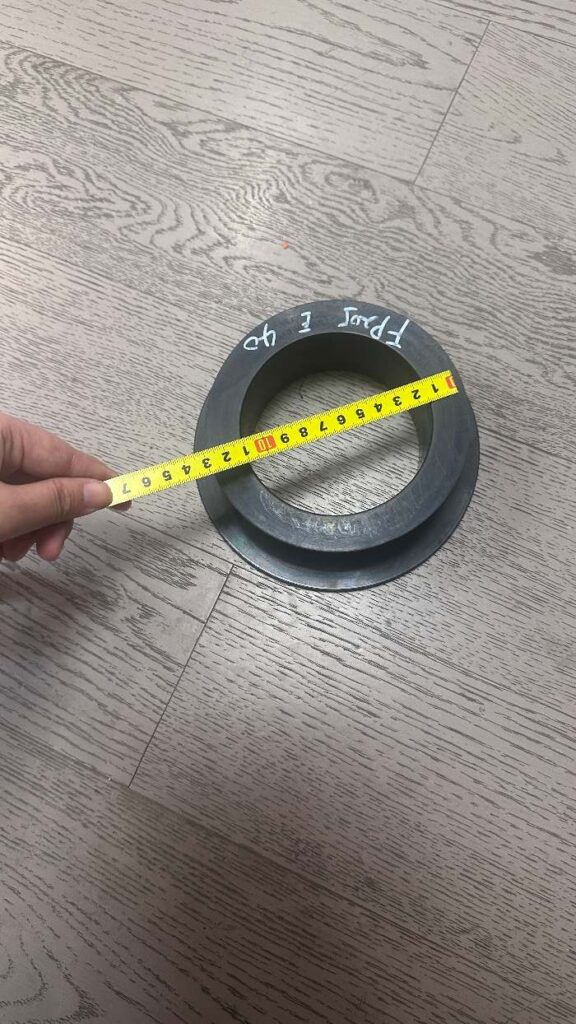
Clear technical information helps manufacturers evaluate replacement heat exchanger rubber inserts accurately.
If the original drawing is unavailable, a simple measurement sheet accompanied by photographs can provide useful reference information.
Recommended quotation documents:
- Inner Diameter (ID): Measured opening diameter.
- Outer Diameter (OD): Measured outside fitting diameter.
- Frame Plate Thickness: Thickness at the installation opening.
- Component Photographs: Front, side and installed views.
- Equipment Nameplate: Manufacturer, model and serial number.
- Rubber Material: NBR, EPDM or the original specified compound.
- Order Quantity: Number of required replacement components.
For components with unusual profiles, collars or reinforced structures, additional photographs and physical samples may be necessary.
The Senovis Rubber Liner Measurement PDF can be used as a dimensional reference when preparing an enquiry.
When comparing plate heat exchanger frame liners, insert gaskets and port liners, be sure to identify each component separately.
Search terms such as rubber liner metal liner or rubber gasket heat exchanger can refer to different products. The actual drawing and installation arrangement should take priority over terminology.
Accurate photographs and dimensions help reduce quotation delays and the risk of supplying incorrect replacement parts.
Plate Heat Exchanger Rubber Boots, Port Sleeves and Frame Inserts: Pricing, Lead Times and Why Choose Senovis
When purchasing replacement plate heat exchanger rubber boots, rubber port liners or frame inserts, the lowest unit price is not always the most cost-effective choice.
Buyers should consider dimensional compatibility, rubber material, manufacturing requirements and international shipping costs.
What affects rubber liner prices?
Important factors include:
- Rubber compound and temperature grade.
- Inner and outer diameter requirements.
- Frame plate thickness and sealing geometry.
- Existing mould availability or custom tooling.
- Order quantity and inspection requirements.
- Packaging and delivery arrangements.
Standard components may have shorter production lead times than specialised or custom rubber inserts. Availability and final lead times depend on the confirmed technical requirements.
Why Choose Senovis PHE?
Senovis (Beijing) Technology Co., Ltd. (Senovis PHE) supplies independently manufactured compatible plate heat exchanger spare parts for international industrial and marine customers.
Our product range includes:
- Plate heat exchanger rubber liners and port sleeves.
- NBR and EPDM rubber inserts.
- Frame liners, rubber bushings and compatible connection seals.
- Standard and end plate heat exchanger gaskets.
- Stainless steel and titanium replacement plates.
- Related plate heat exchanger spare parts.
Senovis serves enquiries from marine and offshore cooling, HVAC, oil and gas, sugar manufacturing, dairy production, milk pasteurization, food processing and other industrial applications.
Our team reviews equipment information, measurements, technical drawings and samples to assess replacement requirements.
International shipping can be arranged through DHL, FedEx, UPS and other suitable logistics providers.
Senovis supplies compatible aftermarket replacement components, not genuine OEM parts. Product compatibility must be verified for each equipment configuration.
Request a Rubber Liner Quotation
Looking for a replacement plate heat exchanger rubber liner, rubber port sleeve, frame liner or rubber insert?
Send us your equipment model, ID, OD, Frame Plate Thickness, material requirements and quantity.
Senovis (Beijing) Technology Co., Ltd. (Senovis PHE)
Website: https://pheheat.com
Email: sales@PHEheat.com
WhatsApp / WeChat: +86 1509 439 6595
Contact Senovis for technical evaluation and a quotation for compatible plate heat exchanger rubber liners and spare parts.
